


Profile
Program Overview
The Culinary Medicine program at Texas Christian University (TCU) is housed within the Department of Nutritional Sciences in the College of Science & Engineering and serves as an interprofessional learning hub for medical students, dietetic interns, nutrition majors, and pre-health undergraduates. TCU began offering Culinary Medicine education in 2014 as the second partner site nationwide to adopt the Health meets Food curriculum for medical students. Since that time, the program has expanded to serve a broad range of learners across the university.
Led by Anne VanBeber, PhD, RDN, CCMS, with co-instruction from Milette Siler, MS, RD, CCMS, the program blends evidence-based nutrition, hands-on cooking, and team-based learning in TCU’s dedicated teaching kitchen.
Programming spans multiple disciplines:
- Graduate Dietetic Students – All graduate dietetic students co-teach as lab assistants for the Seminar in Culinary Medicine, a three-hour spring course that combines lecture with hands-on cooking. Dietetic interns
alsosupport this interprofessional classesduring their eight-week supervised practice rotation by assisting with class operations, shopping, set-up, and small-group facilitation, strengthening leadership and teaching skills. - Medical Students (TCU Burnett School of Medicine) – Approximately 20 first-year medical students participate each year as part of a pass/fail elective, working alongside graduate dietetic students, undergraduates, pre-health students, and nutrition minors. Physicians join sessions to discuss clinical applications alongside the Registered Dietitians.
- Undergraduate Nutrition & Pre-Health Students – Students engage in Culinary Medicine through an undergraduate course, participating alongside graduate and medical learners in interprofessional cooking teams.
- Culinary Medicine Student Interest Group – Hosts 2–3 culturally focused cooking events annually, promoting peer learning and expanding engagement across campus.
Classes take place in TCU’s 10-station teaching kitchen, which supports small-group collaboration and independent recipe execution.
Faculty Leadership
 Anne VanBeber, PhD, RDN, CCMS — Program Lead
Dr. VanBeber is a longtime faculty member in TCU’s Department of Nutritional Sciences and a Certified Culinary Medicine Specialist who introduced the Health Meets Food curriculum to Fort Worth in 2014. A Registered and Licensed Dietitian and Fellow of the Academy of Nutrition and Dietetics, she has taught food and nutrition courses for more than 30 years and is widely recognized for her excellence in teaching, scholarship, and community engagement.
 Milette Siler, MS, RD, CCMS — Co-Instructor
Milette Siler is a Registered Dietitian and Certified Culinary Medicine Specialist with expertise in clinical nutrition, culinary medicine program development, and interprofessional education. She serves as Director of Nutrition Services and Culinary Medicine at Moncrief Cancer Institute and co-teaches Culinary Medicine coursework at Texas Christian University, contributing both lecture and applied instruction. Her work bridges clinical care, teaching kitchens, and community-based programming, with a focus on practical, patient-centered nutrition education.
 James T. Cox, MD — Physician Lecturer
Dr. Cox is a board-certified gastroenterologist and faculty member at the Burnett School of Medicine at TCU. He directs the Gastrointestinal and Nutrition module for first-year medical students and contributes to Culinary Medicine lectures, bringing clinical insight into digestive health and patient-centered care.
Kate Evans, DTR, CCMS — Program Support
Kate Evans is a Certified Culinary Medicine Specialist (CCMS), and a Dietetic Technician, Registered (DTR) serving as an adjunct professor and lab coordinator in the TCU Department of Nutritional Sciences. She works with students from all levels in the kitchen and enjoys sharing her expertise and passion for food and dietetics. Each student brings a different set of knowledge, skills, and cultural background to the table, so Kate enjoys adapting to changing needs, as it is imperative for each student to have success in the kitchen.
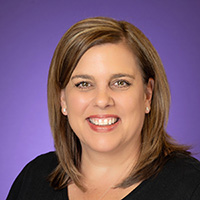 Meggan Duncan — Departmental Coordinator
Meggan Duncan serves as the Coordinator in the Department of Nutritional Sciences at TCU and is the go-to for all things administrative. She is in her 10th year at TCU and keeps daily operations running smoothly by assisting faculty and students with day-to-day needs.
 Ashley Mullins, MS, RD, LD, CNSC
Ashley Mullins is a Registered Dietitian and Assistant Professor of Professional Practice at Texas Christian University, where she serves as Graduate Director and Program Director for the ACEND-accredited Coordinated Graduate Program in Dietetics. With nearly 20 years of experience across clinical nutrition, healthcare leadership, and academic instruction, she oversees curriculum development, accreditation, and experiential training partnerships. Her teaching emphasizes experiential learning, leadership development, and preparation for professional practice in diverse healthcare settings.
Spotlight & Media
- Students consistently cite the interprofessional structure—working alongside peers from dietetics, medicine, and nutrition—as one of the most valuable aspects of the course.
- The teaching kitchen’s station-based design fosters collaboration, independence, and confidence in real-world cooking and counseling skills.
- Learners report meaningful shifts in their eating habits, meal prep routines, and cooking confidence, often sharing stories of trying new foods, improving family meals, or adopting practical strategies discussed in class.
Lessons Learned & Advice for Other Programs
Anne emphasizes that Culinary Medicine education must go beyond cooking technique to include everyday food skills such as grocery list development, budgeting, shopping strategies, and meal prep. She notes the importance of community-building through shared meals and encourages programs to remain flexible, forward-thinking, and collaborative. Over time, the ACCM modules have provided a strong foundation that can be adapted to learner needs while fostering professional growth and interprofessional respect.


